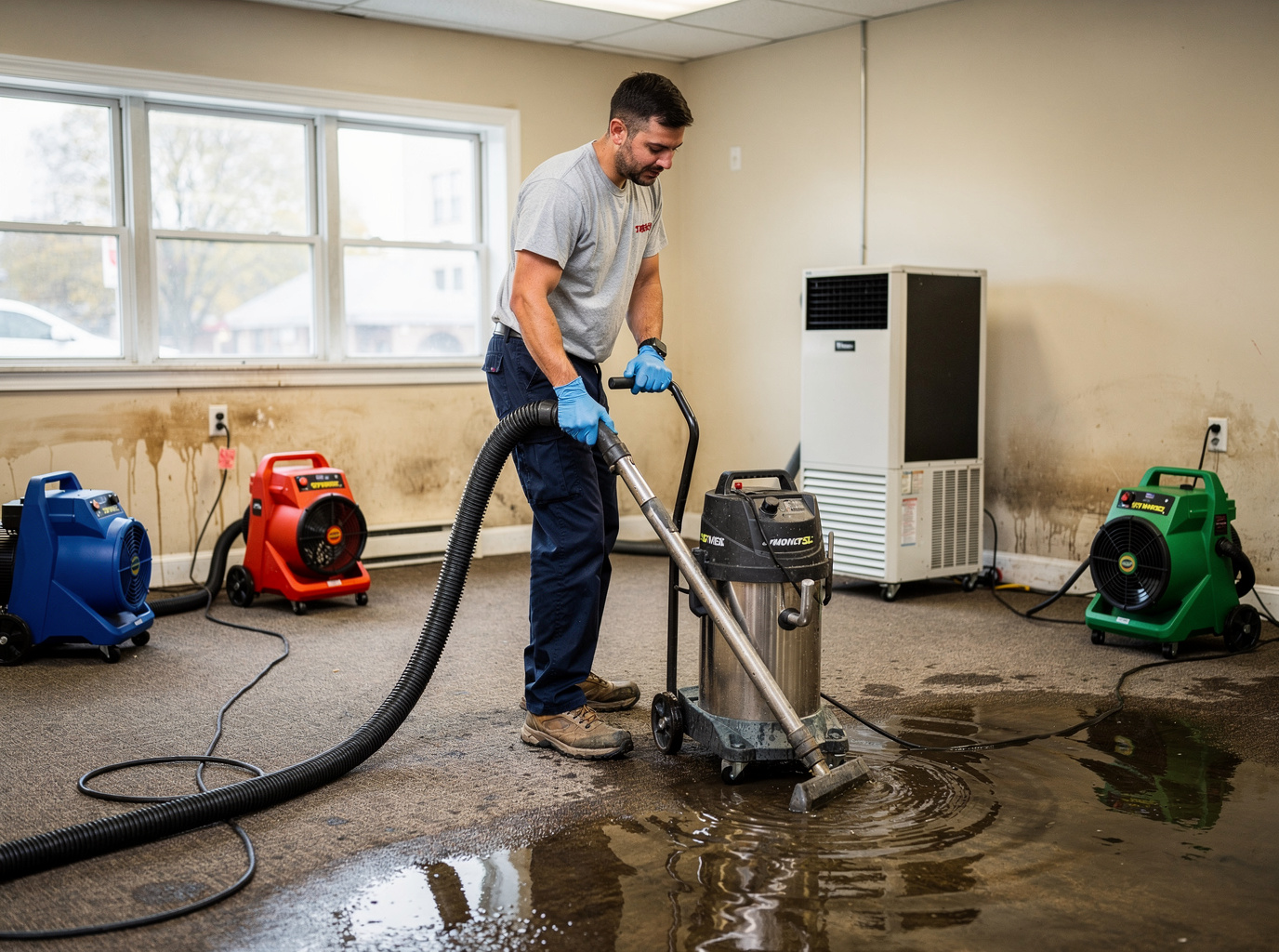
Sayville properties along Montauk Highway and near the Connetquot River often see water intrusion from heavy summer storms and winter nor’easters. Older colonials and capes built before 1960 sit on lots with clay-heavy soil that drains slowly, so standing water reaches foundations faster than in newer subdivisions. Babylon Water Damage Restoration Pros responds from 151 Lafayette Rd in West Babylon to extract water, dry wall cavities, and prevent mold in these tight-access homes.
When tidal flooding pushes water up Edwards Avenue or across low spots near the LIRR tracks, we use truck-mounted extractors sized for the narrow driveways common in Sayville Village. We focus on the real conditions here—humid summers that keep moisture in basements and cool winters that slow natural drying—so every job finishes with moisture readings that meet local code before we leave the site.
Homeowners near Sayville High School or Gillette Park call us after roof leaks or sump failures because our crews know the side-street layouts and can stage equipment without blocking school traffic or park access. We provide upfront quotes and work directly with Suffolk County residents who need fast, visible results on their property.
Around Sayville
We regularly work near:
- 📍Sayville Library
- 📍St. Ann's Episcopal Church
- 📍Sayville High School
- 📍Edwards Avenue
- 📍Connetquot River State Park Preserve
- 📍Sayville LIRR Station
Water Damage Restoration in Sayville — Local Notes
- •Sayville’s pre-1960 housing stock features full basements with fieldstone foundations that crack along mortar joints after repeated tidal surges from Great South Bay.
- •Lots along Edwards Avenue and south of Sunrise Highway sit lower than surrounding streets, so water pools against garage slabs and requires subfloor drying before new flooring can go down.
- •Humid summers keep relative humidity above 70 percent for weeks, extending drying times in closed-up capes unless we run commercial dehumidifiers tied to exterior exhaust.
- •Narrow driveways off Main Street limit equipment size, so we stage drying fans through side doors and monitor via wireless sensors placed in finished attics common in local colonials.