2026-11-14 · Frank Delgado
How To Dry Out A Flooded Basement In Coastal Long Island Winters
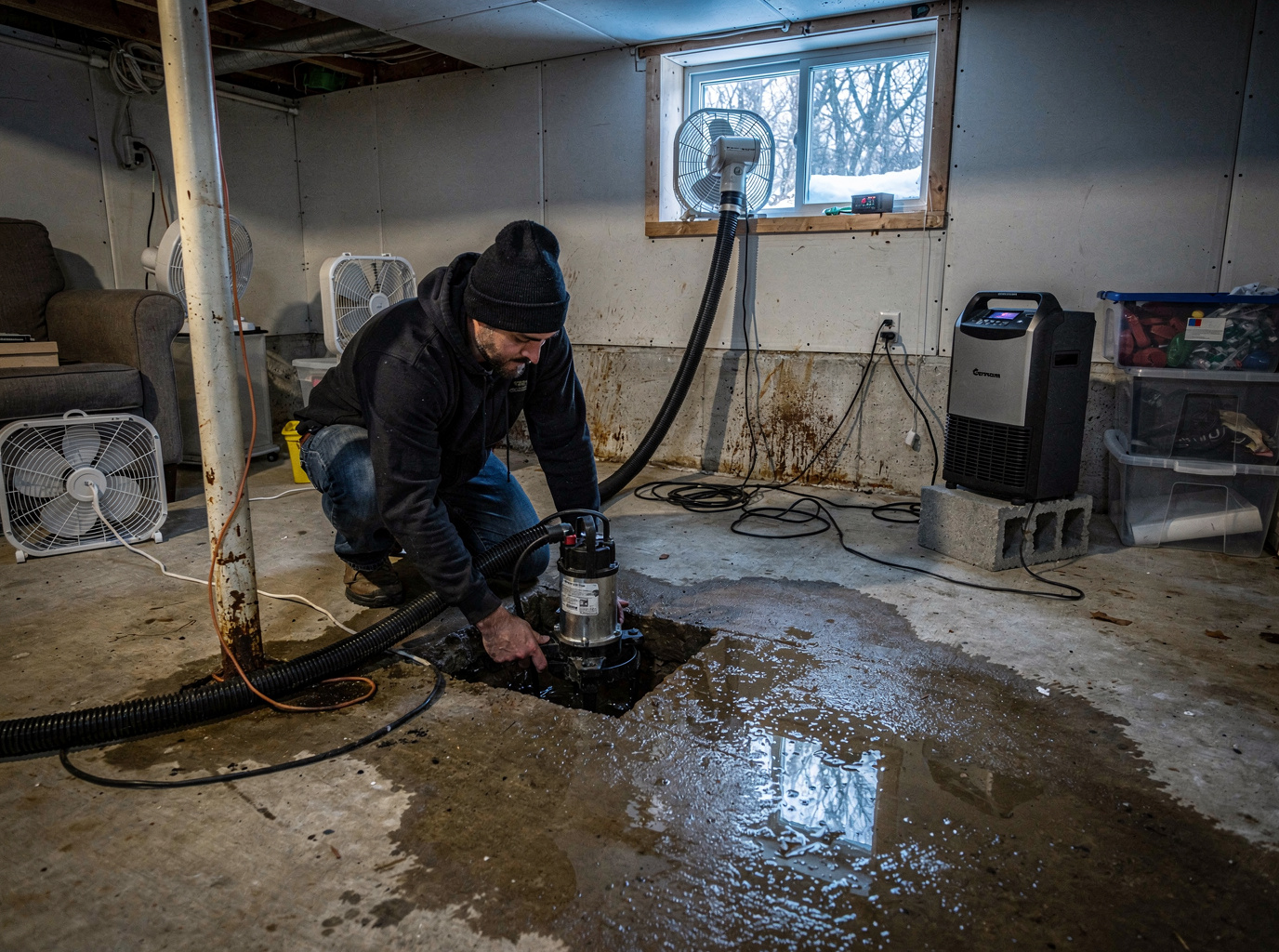
In coastal Long Island winters, drying a flooded basement in Babylon typically requires 5 to 10 days when using industrial dehumidifiers and air movers, though older homes with concrete foundations in West Babylon may extend to 12 days if groundwater seepage continues. Suffolk County's cool temperatures below 40 degrees Fahrenheit reduce evaporation rates, so homeowners must combine mechanical drying with targeted ventilation while monitoring moisture levels in basements common to 1950s-1970s construction stock around Babylon Village and Argyle Lake Park.
Assessing Water Intrusion Sources
Start by identifying entry points such as foundation cracks or sump pump failures that worsen during cool winter rains in Suffolk County. In neighborhoods like West Babylon, clay-heavy soils hold moisture longer, pushing water through basement walls when temperatures drop. Measure standing water depth with a ruler and document affected square footage before proceeding. Check for hidden leaks near utility lines, as homes built before 1980 often lack modern waterproofing. This evaluation prevents repeated flooding events common near Amityville borders where tidal influences raise local water tables.
Removing Standing Water Safely
Extract water using submersible pumps rated for at least 2,000 gallons per hour, then follow with wet vacuums to reach residual puddles. Work in sections to avoid spreading contaminants across the concrete slab typical in Babylon Village properties. Dispose of extracted water through exterior drains rather than household systems to prevent backups during winter storms. Wear protective gear because cold conditions can mask bacterial growth in flooded areas. Once bulk water is gone, focus shifts to evaporation, which proceeds slower when outdoor humidity stays elevated along the South Shore.
Deploying Drying Equipment
Position commercial dehumidifiers to pull 50-70 pints per day and pair them with air movers angled at 45 degrees across wet surfaces. Run equipment continuously for the first 72 hours, checking humidity readings every 12 hours until levels fall below 50 percent. In West Babylon homes with limited basement access, place units near stairwells to promote airflow without freezing coils during overnight temperature dips. Supplement with portable heaters set no higher than 80 degrees to avoid warping wooden joists. Monitor progress with moisture meters on drywall and framing to confirm readings drop below 15 percent before stopping.
Handling Winter-Specific Obstacles
Low temperatures in Suffolk County slow moisture release from porous materials like insulation and flooring, requiring extended run times on drying equipment. Seal off the basement from upper levels with plastic sheeting to contain humidity while allowing fresh air exchange through small vents during milder afternoons. Address ice formation risks by insulating exposed pipes before starting fans. Properties near Argyle Lake Park face additional challenges from wind-driven moisture that infiltrates window wells. Adjust strategies for these conditions rather than relying on summer drying methods that assume warmer ambient air.
For detailed flood zone impacts on local basements, review Local Flood Zones And What They Mean For Babylon Properties. Homeowners needing extraction support can explore Water Damage Restoration options suited to Suffolk County winters.